Ostrischizocracy
Meaning: "Rule By Schizophrenic Ostriches". Derived from the word; "Ostrich", the prefix; "Schizo", and the suffix; "cracy".
Ostrischizocracy was the first of the four compositions to be made. In some respects it is the simplest, but in other respects it is the most comical of the four paintings. It sets the stage with a number of motifs that are used throughout the paintings: Roman bathes, unconscious women, androgynous prophets with empty books, and therianthropic hybrids of humans and birds. Look carefully at the series and you will find these motifs repeated and varied in a number of instances in the artwork.
Ostrischizocracy
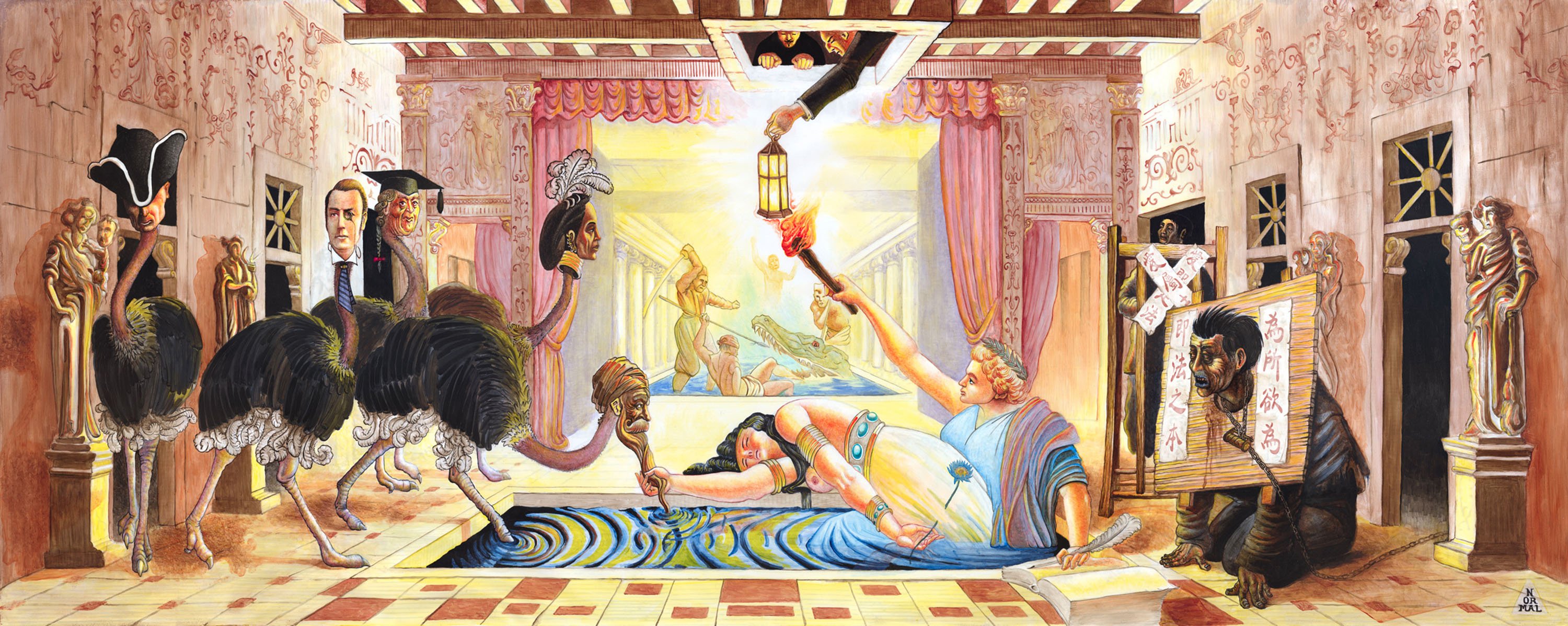
(7)
Ostriches
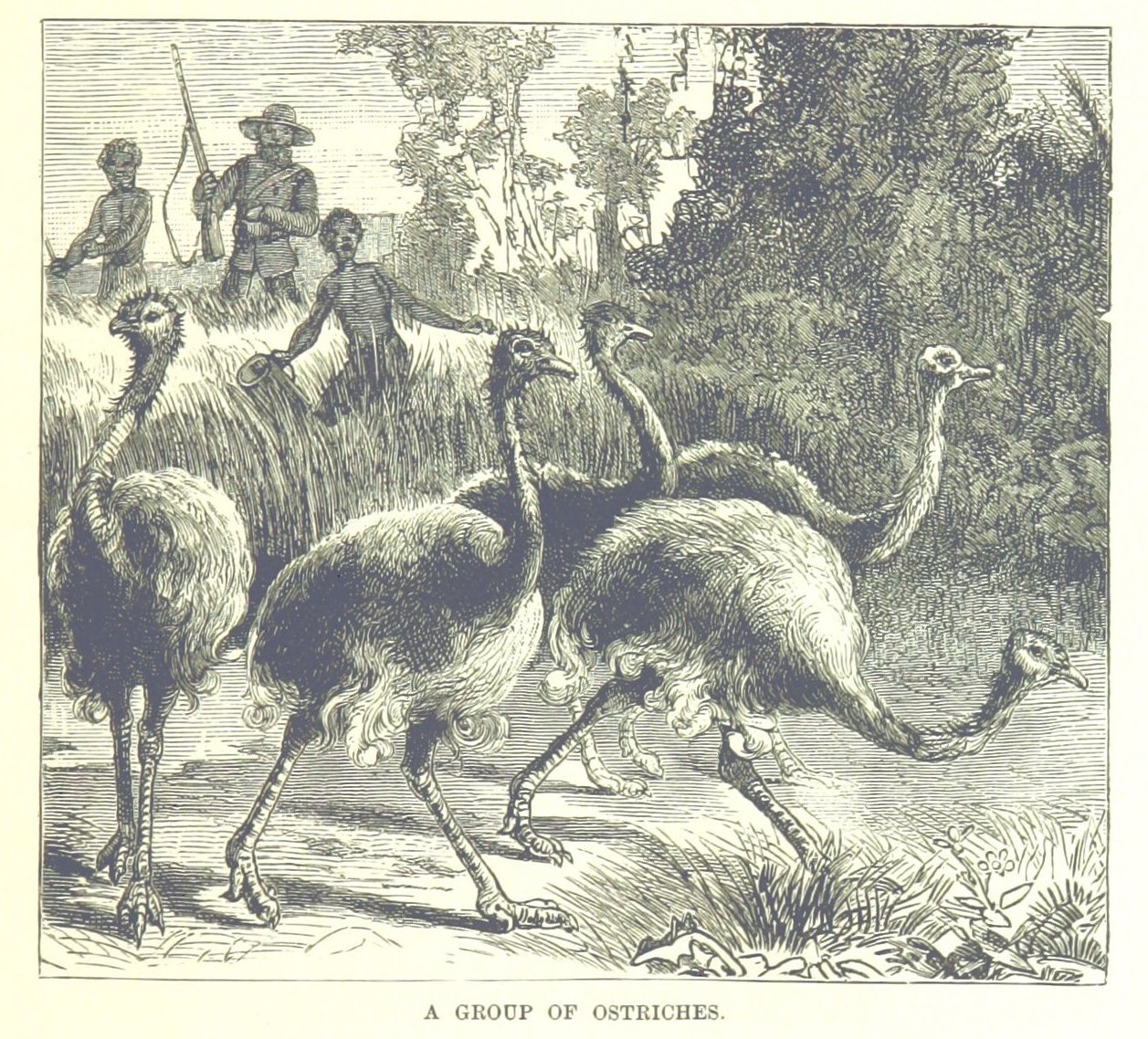
Ostriches with human heads. Well, these ostriches needed to be revised quite a bit in order to be proper ostriches since the original illustrator was evidently ignorant of a crucial fact of the bird's anatomy: They only have two toes! What he drew appears to be a gaggle of emus, who, though similar to ostriches, have three toes.
Why bother to carefully correct this if you are going to drastically alter there anatomy with an addition of pure fancy (i.e.; a human head)? Very simply because it simply would not be "Ostrischizocracy" if the birds were emus.
Emus, you see, have no reputation for foolishness, because they are not believed to hide their heads in the sand. Actually, ostriches do not hide their heads in the sand, it only appears so from a distance when they have their heads down and are hunting for things to eat on the ground. However, be that as it may, the image salient to the metaphor - that of a "government by schizophrenic ostriches".
Ostriches, from the Collection of the British Library
Ostriches (2)
Chamberlain
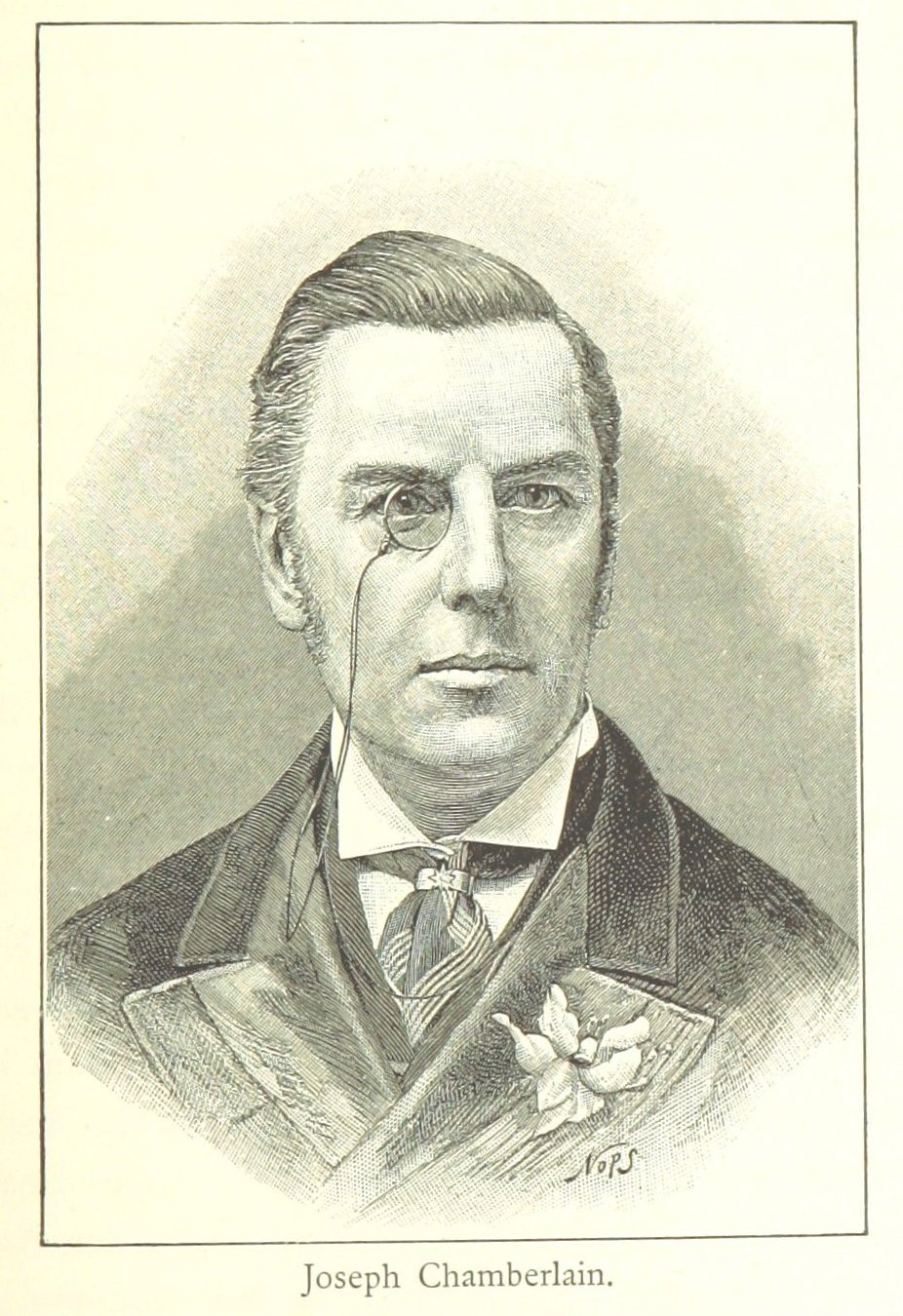
Winston Churchill called Joseph Chamberlain "a splendid piebald: first black, then white, or, in political terms, first fiery red, then true blue." . . . or going even further first a man, and now an ostrich (possibly the better to run from one side to the other).
During the process of making these paintings I often spent as much as 10 hours per day working. However, on the day that I made this rendering of Chamberlain I was completely exhausted after a mere two hours. It was strangely hard work as though the spirit of this man desperately did not want to be placed on the head of an ostrich or have anything to do with "government by schizophrenic ostriches" (i.e.; "Ostrischizocracy"). I felt like Chamberlain was fighting me, and clearly, even from beyond the grave, here was a man who could put up a good fight. I did prevail in the end, and now he has had a new and strange honor bestowed upon him.
Chamberlain, from the Collection of the British Library
Chamberlain (2)
Guy Fawkes
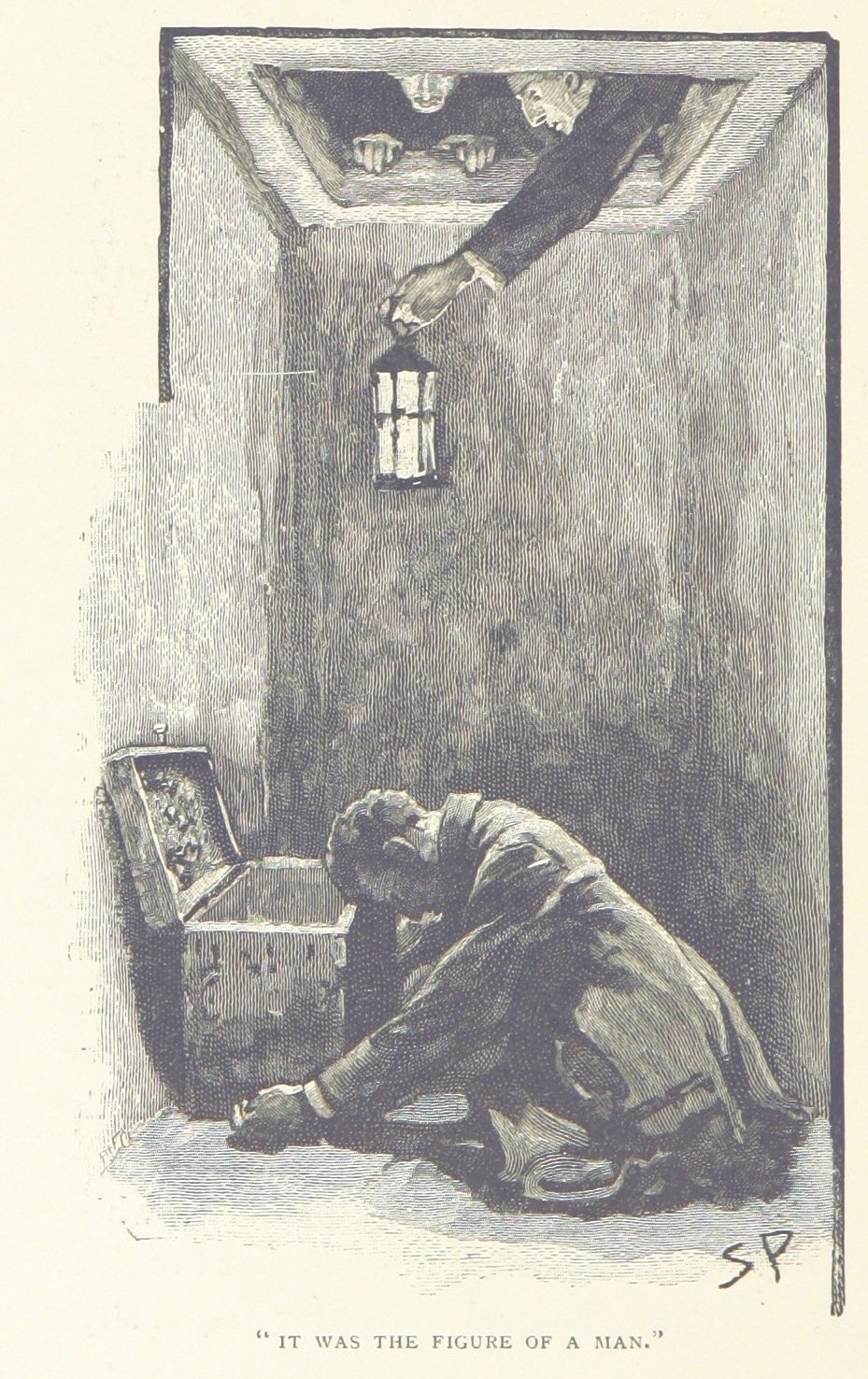
This illustration shows perhaps the discovery of a nefarious crime. That must be Mr. Holmes with the lantern and Watson peering through the trap door to discover some nefarious deed . . .
In the process of painting the presumed Dr. Watson became Guy Fawkes and Holmes an anonymous lantern bearer there to provide a Promethean flame to the androgynous prophet bathing in the Roman bath below.
'Guy Fawkes', from the Collection of the British Library
Guy Fawkes (2)
Hataska
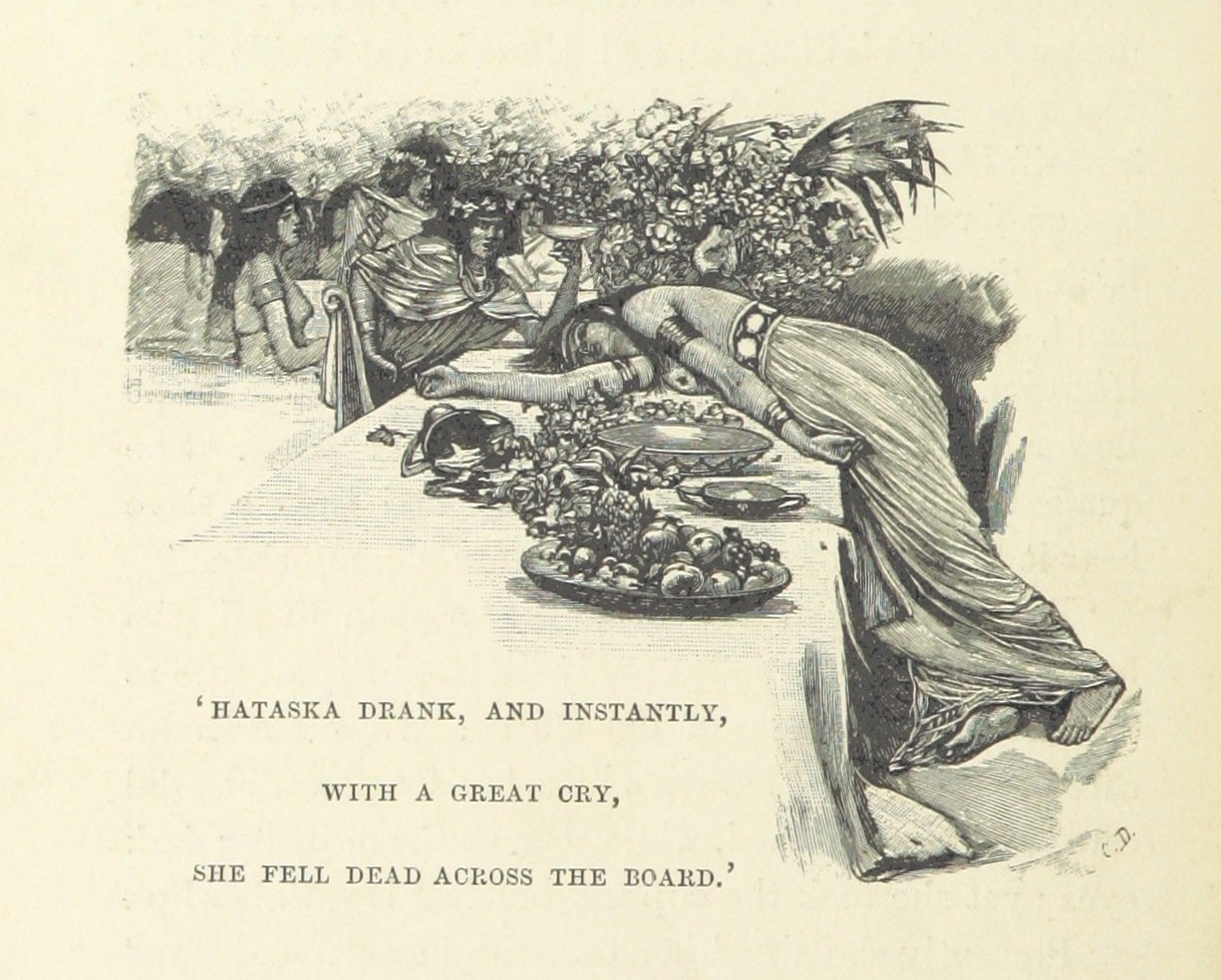
The barbarian princess, swooning in the bathing pool, commits the sacrilege of fondling the Muslim's beard in one hand, while holding the sacred lotus flower in the other hand - perhaps the very flower that has intoxicated her. In her sensual lethargy she merges the profane with the sacred, while laying in the lap of the prophetess who joins water with fire.
The image itself is derived from the H. Rider Haggard novel, "World's Desire" (1890), in which the unfortunate Hataska, vying for the affection of a Pharoah, is poisoned by his queen.
Hataska, from the Collection of the British Library
Hataska (2)
Prophetess
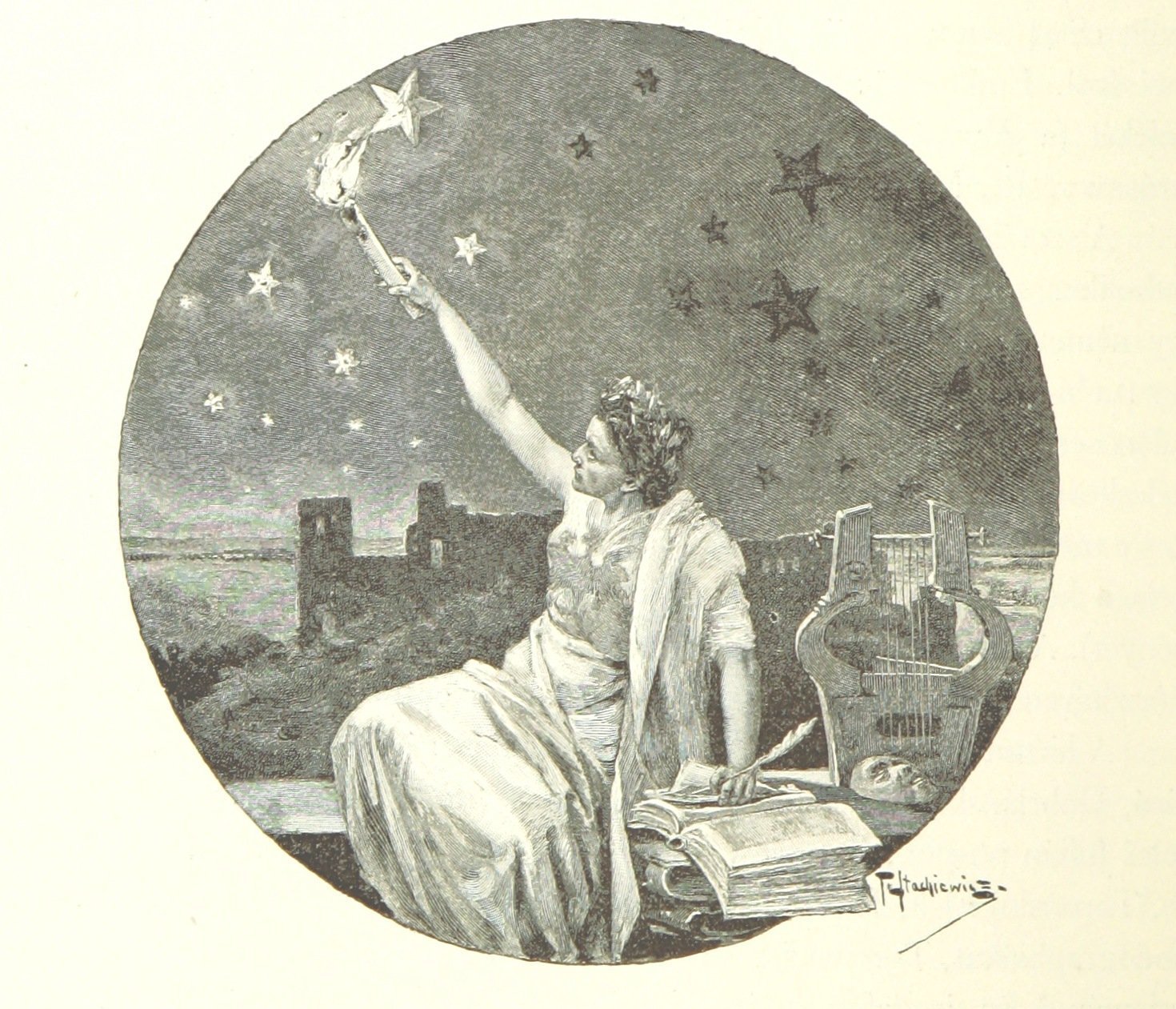
Accepting the forbidden flame of divine inspiration proffered by Guy Fawkes and Co. , the prophetess - part male, part female - holds open the page of an empty book, quill in hand, ready to write . . . write what? An "Ostrischizocratic" constitution?
Prophetess, from the Collection of the British Library
Prophetess (2)
Chinese Convicts
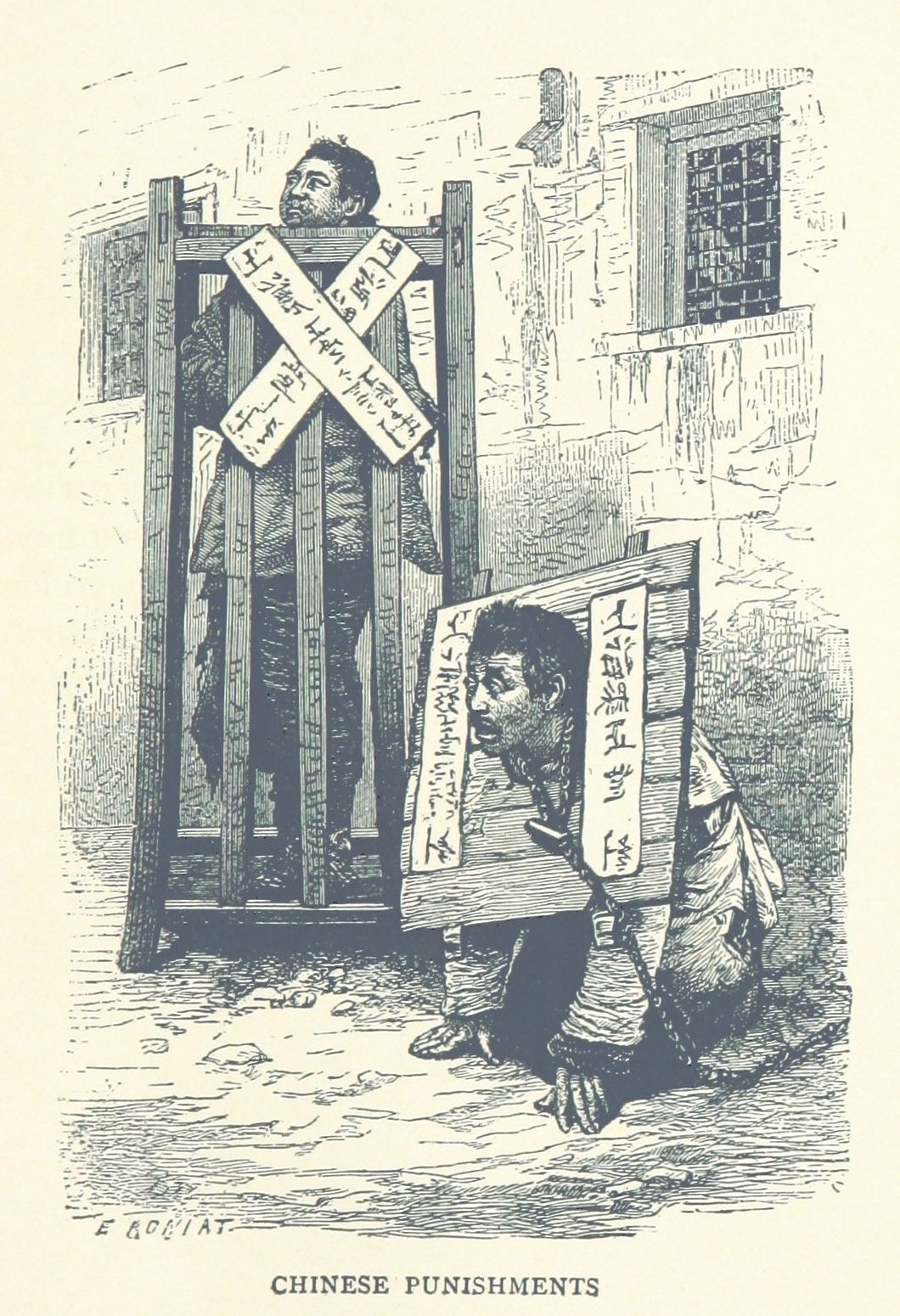
The original illustration fudges the Chinese writing. I took pains to correct this, and engaged the help of Taiwanese friends, and a Chinese language translator to render Aleister Crowley's famous "Motto of Thelema", "Do what thou wilt shall be the whole of the law" into classical Chinese.
Of course that is an ironic statement considering that these pilloried convicts did not find that the exercise of their free will turned out to be the whole of the law, but rather the worst portion of it. And now they are seated before the prophetess's empty book as though preparing for an ESL lesson from hell.
Chinese Convicts, from the Collection of the British Library
Chinese Convicts (2)