Purcogitoresque
Meaning: "In the style of forethought". Derived from the words "Purgatory", "Percolate", "Cognition" and "Grotesque".
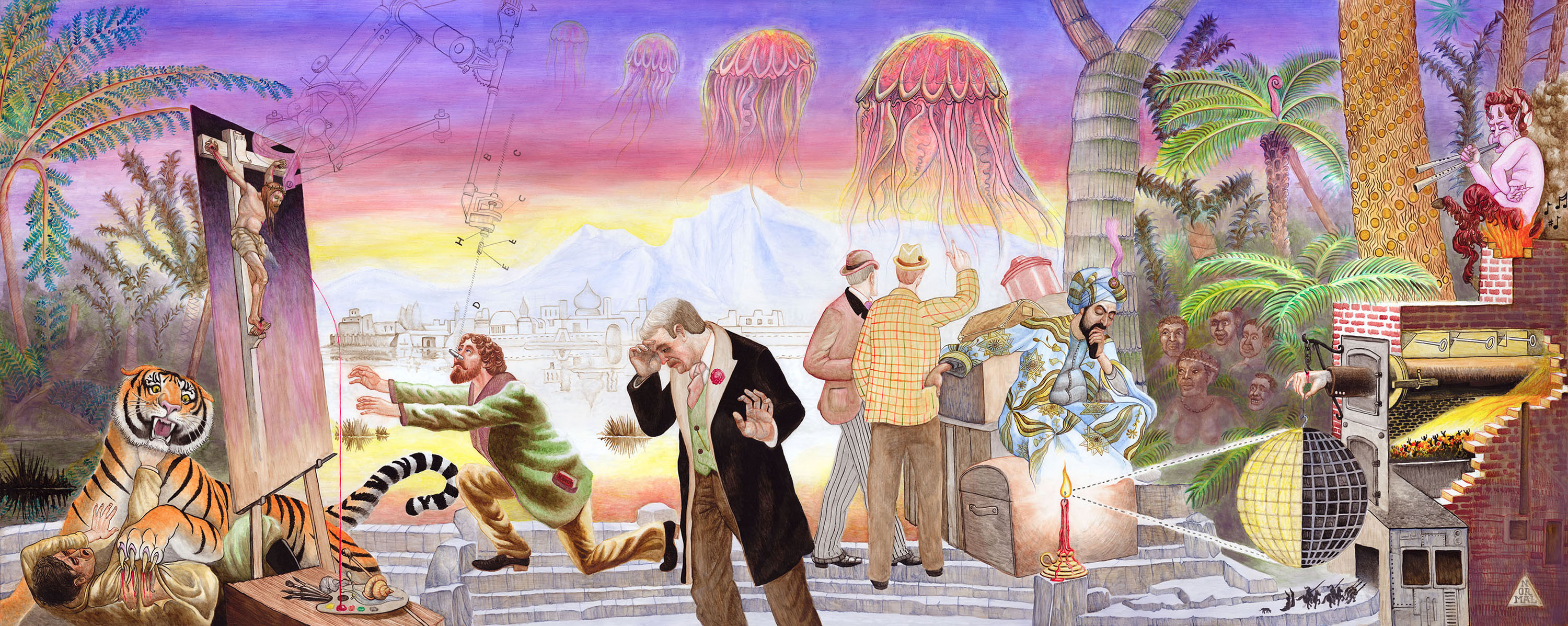
Purcogitoresque is perhaps the most personal of the Crossroads series. David Normal personally identifies with the characters in the painting - particularly the artist, a Prince Myshkin like figure, who is seeking for his salvation through his own work. However, the figure of the Sultan who is simulataneously sacred and profane also appeals directly to the artist's own sensibilities since he finds beauty in the paradoxes and contradictions of human nature. The two dandies reaching out to a jellyfish as though hailing a cab represent Normal's own predilection for fashion and style, seemingly a pedestrian concern, while being preoccupied with truly otherworldly matters that transcend not only the latest trends, but the very fabric of space and time.
Purcogitoresque
(7)
Tigress
On one side of the canvas; pious salvation, on the other, lurking behind; the beastly libido that drives artistic creation.
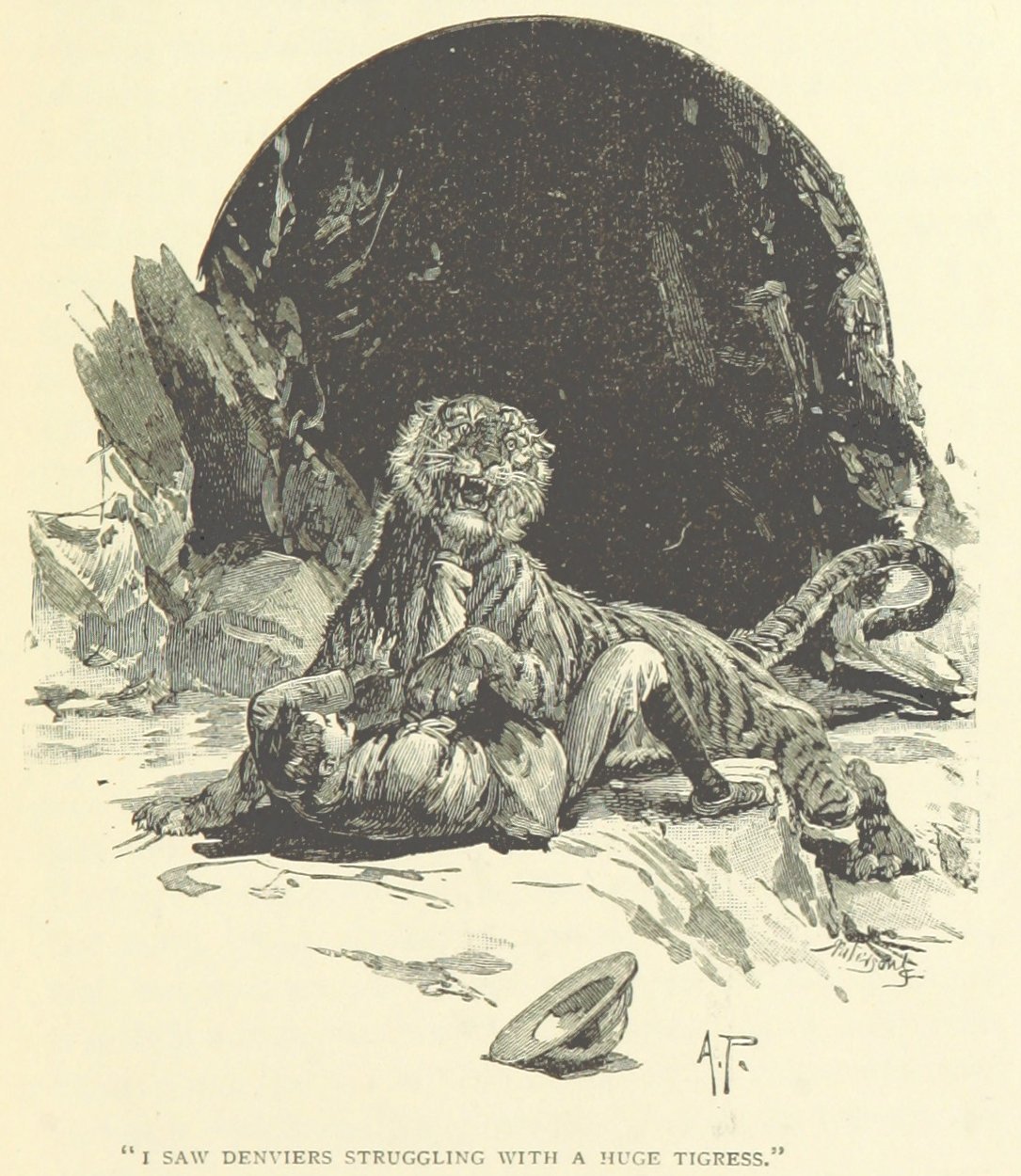
Is the tigress's victim an artistic competitor? On the one side the sanctity of the work of art, but behind the canvas the ruthless, merciless world of the business of art?
This illustration comes from a book of the genre of manly daring do in exotic places. The man is not "struggling" - he is being slain. The drawing, on close inspection, is not well made and if the proportions of the left arm be correct then that arm is being severely disjointed by the weight of the tiger.
Tigress, from the Collection of the British Library
Tigress (2)
The Painter
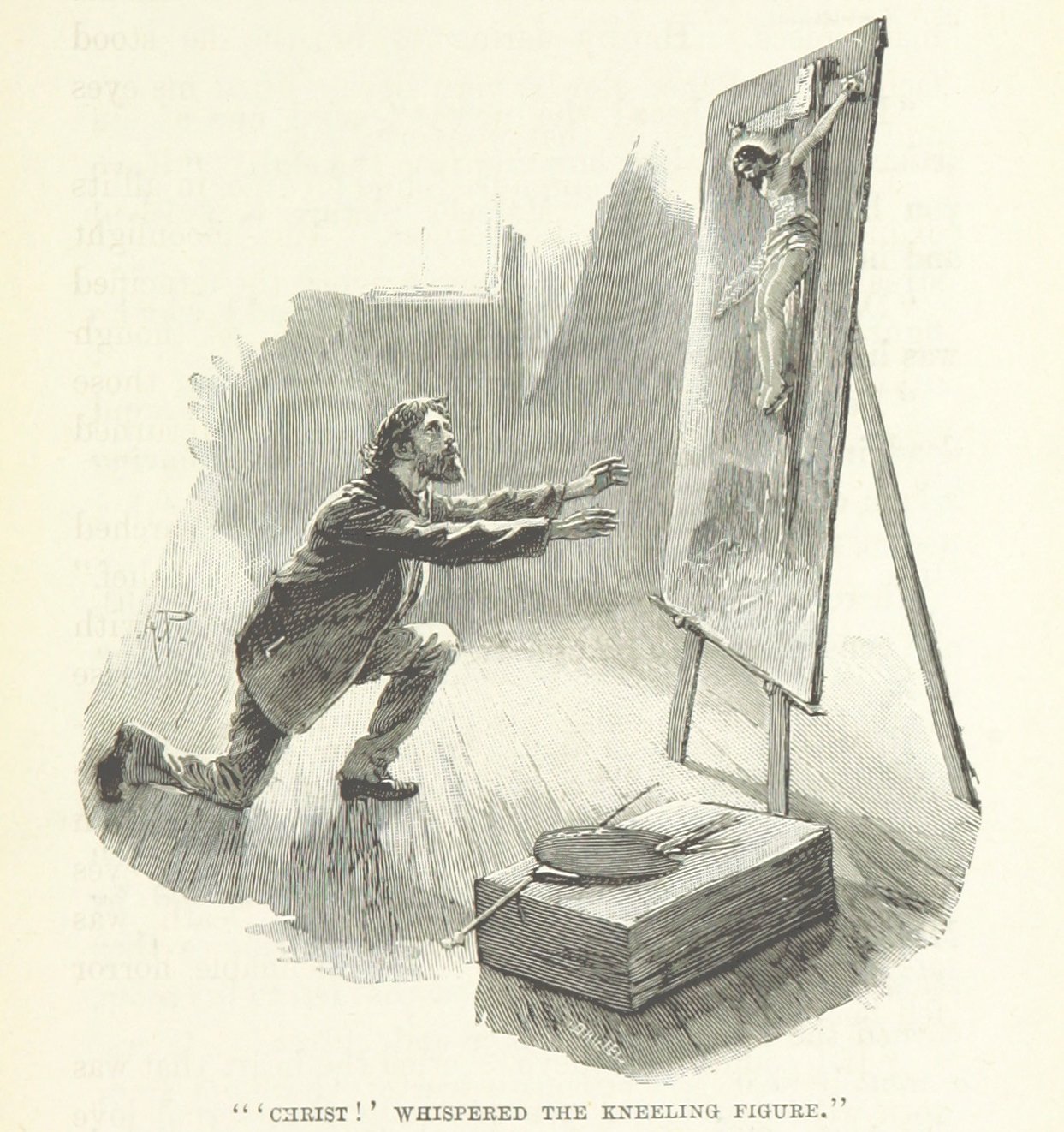
Pygmalion like, an artist of Christ-like countenance seeks salvation in his own work, and the Jesus of his painting comes to life arising out of the paint which, supplied generously from the Christ's bleeding stigmata, is the very same stuff with which the image of Christ has been rendered.
A snail on the palette represents the slow pace of the practice of oil painting.
The Painter, from the Collection of the British Library
The Painter (2)
Jellyfish
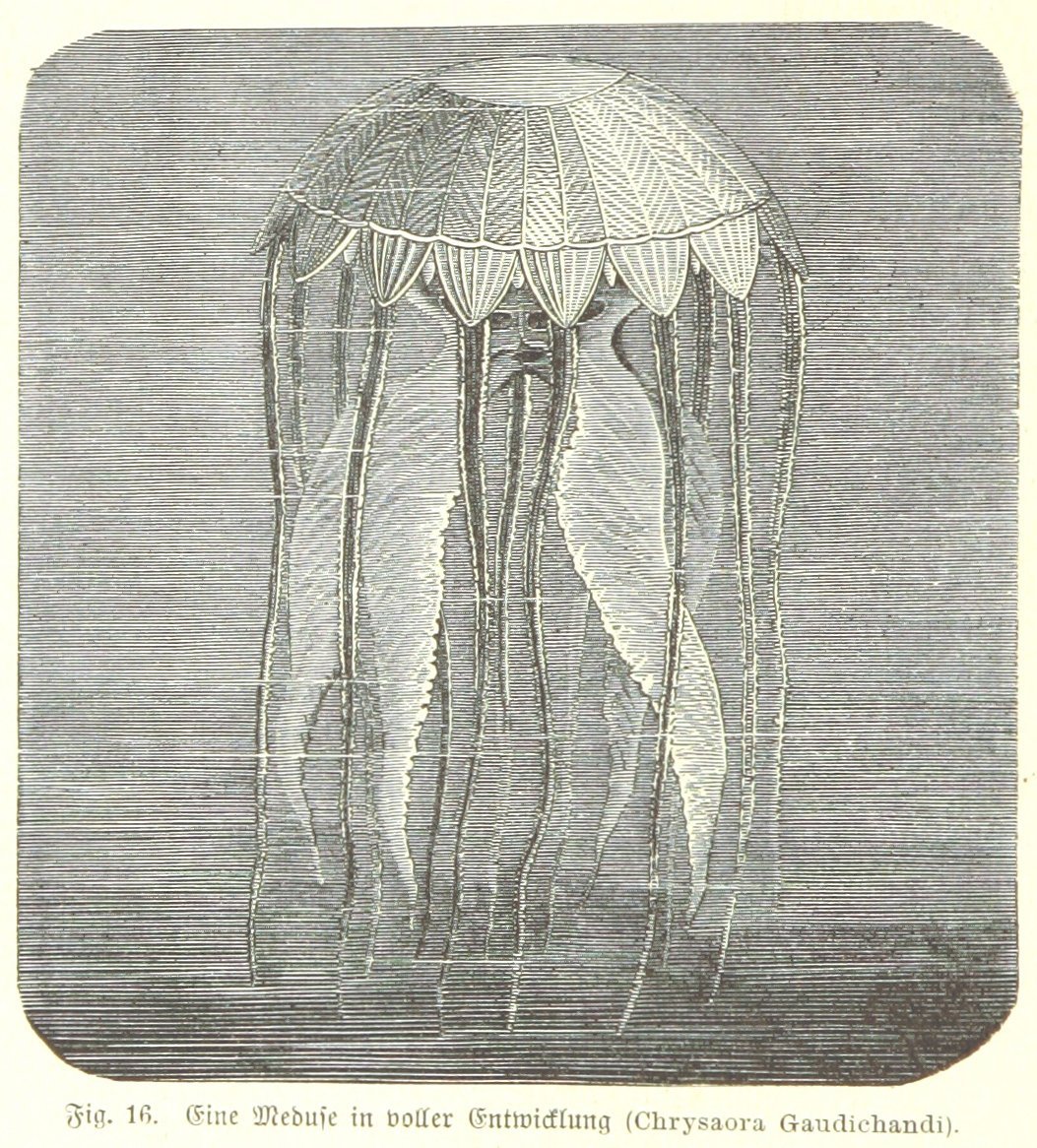
A jellyfish of the genus 'chrysaora' here depicted as an alien invading from the heavens. What life form could be more alien to humanity than the jellyfish? Whereas human consciousness is distinguished by the power of the will, the jellyfish seems to radiate an order and an awareness that is completely free of the will, that with an egoless sentience floats drifting on oceanic currents, a living mandala. The flying saucer is like a jellyfish floating on cosmic currents, representing an "otherness" of consciousness that is the inverse of human ego driven awareness.
Jellyfish, from the Collection of the British Library
Jellyfish (2)
The Businessman
Gin-blossomed, overwrought with responsibilities, a successful businessman, a pillar of society, philanthropist, Freemason, etc., and burdened with feckless dreamers for progeny - a classic bourgeois patriarch whose quiet despair gives way to riotous bohemianism in his children. To his right, his son the mystic artist with the temperament of a Prince Myshkin, and to his left self-indulgent dandy brothers, more dapper and suave though no less smug than Tweedledee and Tweedledum. Finding no solace in his sons, but rather a hopeless financial burden, in desperation he seeks to exit the picture and join the world we live in.
The Businessman, from the Collection of the British Library

The Businessman (2)
The Sultan
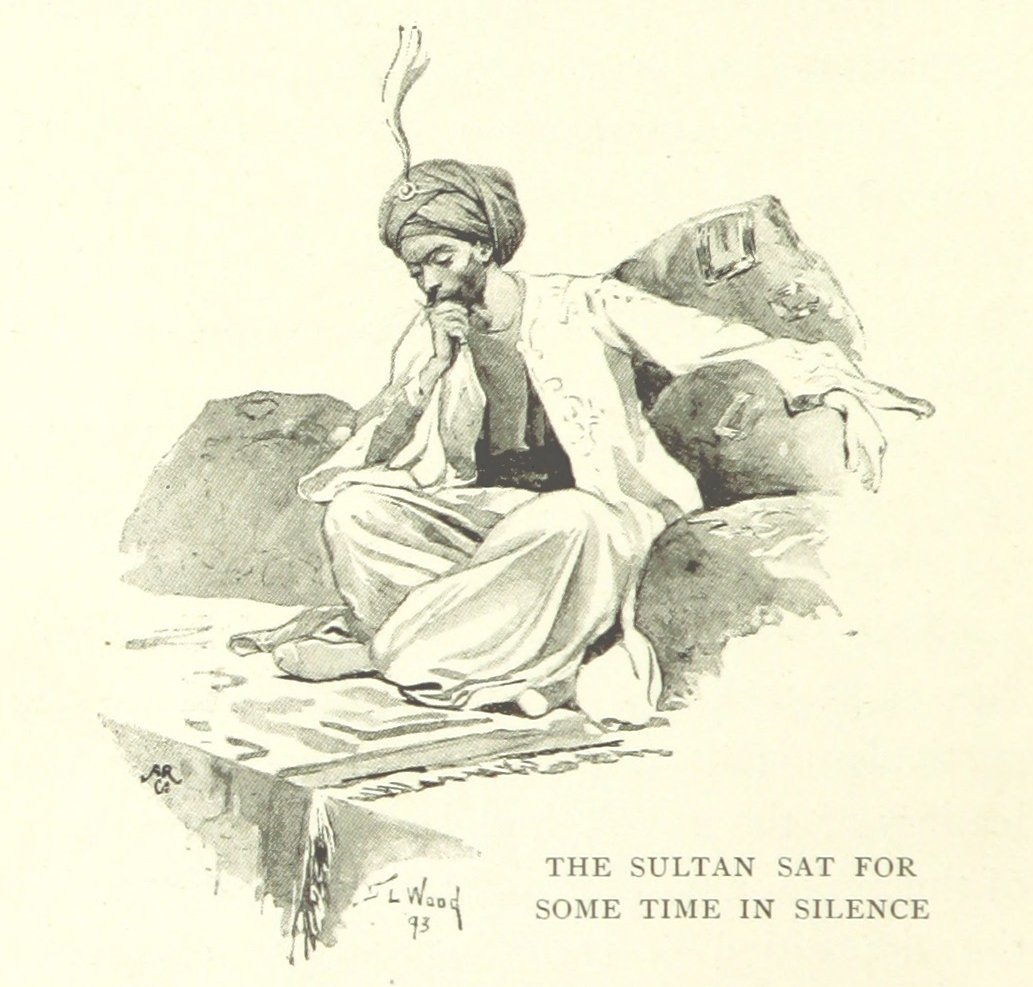
Dressed as Turkish sultan in a 17th Century Keftan, sitting in meditative repose, yet keeping his wits well enough about him not to miss an easy opportunity. Who is this "Sultan" whose candle illuminates the world? Is he not one who dwells in the light, and also hides in the shadows, and what is wrong with that? The world does not turn on ethics alone.
The Sultan, from the Collection of the British Library
The Sultan (2)
Pan
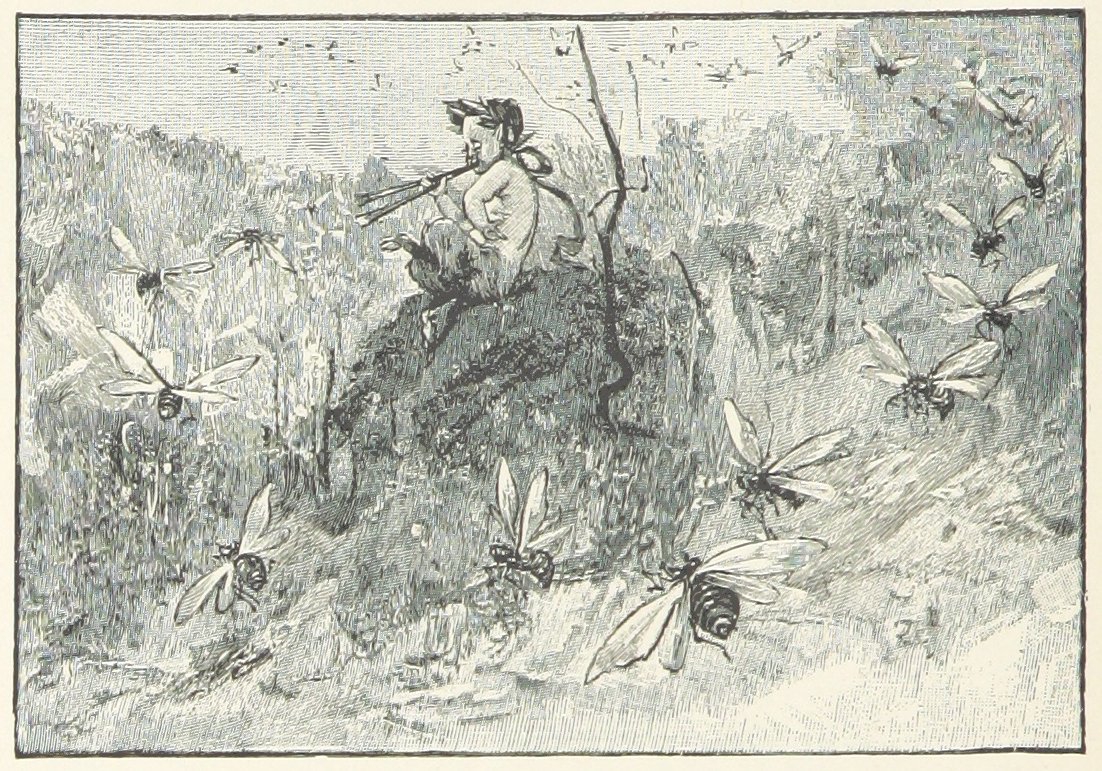
A cherubic Pan misplays his pipes to sound a clarion shriek, pronouncing the Great God Pan is dead, proclaiming the futility of nature against the engines of civilization. Look at the illustration closely - that is not how you play the pan pipes! Pan pipes are played with two hands. Pan the only mortal god of the Greek pantheon, sits upon the flames of hell releasing a music from his nether region, and keeping his fingers crossed.
Pan, from the Collection of the British Library
Pan (2)